Keep the user in one flow
Authenticate, keep RPC alive, route liquidity, and on-ramp fiat through supported providers without leaving the app.
Web5 NexusFour live infrastructure products for wallets, fintechs, and product teams. This lite deck is the open story; request the investor deck when you want the raise and diligence pack.

In our software firm’s blockchain client work since 2017, the same pattern kept repeating: shipping a real product meant stitching wallets, RPC, liquidity, fiat rails, security, analytics, messaging, and alerts across separate vendors, SDKs, dashboards, and invoices.
Management-observed pattern from client delivery. Not a market survey.
Bars are illustrative scale for cited market figures — not company revenue. Definitions differ across sources.
Thesis: as stablecoin, tokenized-asset, and multi-chain activity grows, teams will prefer fewer commercial relationships. Point tools proved each job. The open gap is a shared product and account layer.
Web5 Nexus productizes the stack we kept rebuilding for clients. Today: public infrastructure surfaces. This round: shared projects, keys, usage, entitlements, support, and billing. Later: growth and ops modules on that account.
These surfaces demonstrate technical execution. Bootstrapped and pre-revenue: we are validating production usage, willingness to pay, and multi-module adoption. No company revenue or external production KPIs are claimed here.
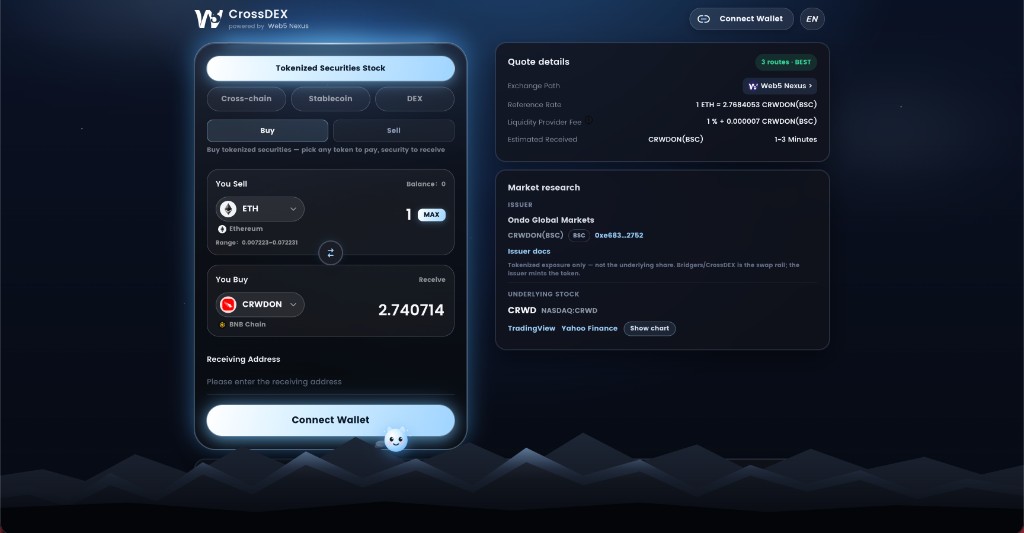
Aggregator for swaps, stablecoins, and tokenized-asset routes across multiple partner sources. We operate the DEX-side aggregation layer.
Open ↗
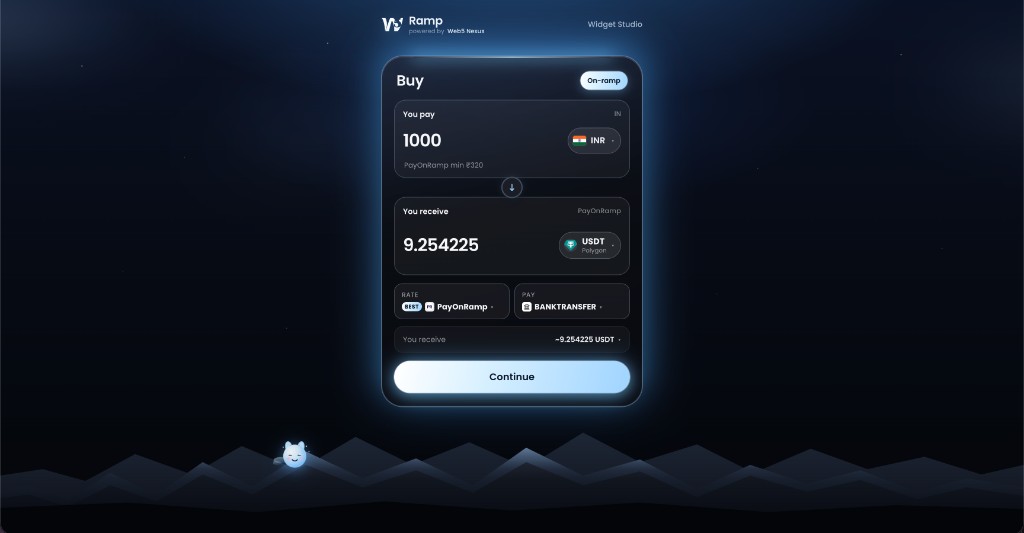
Fiat on-ramp aggregator across regulated partners. KYC and licenses sit with the third-party provider. Corridors vary by jurisdiction.
Open ↗
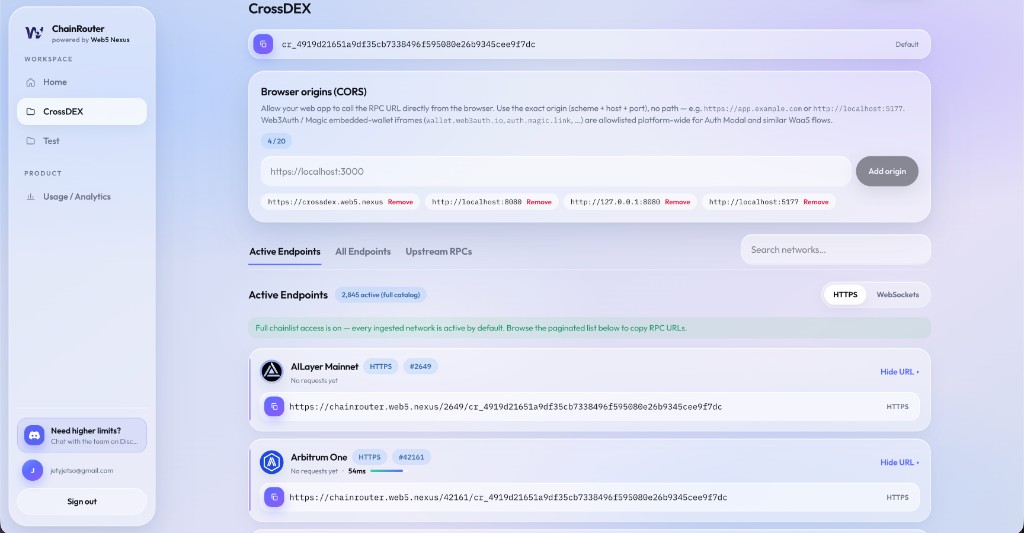
EVM RPC failover, keys, quotas, and usage analytics.
Open ↗
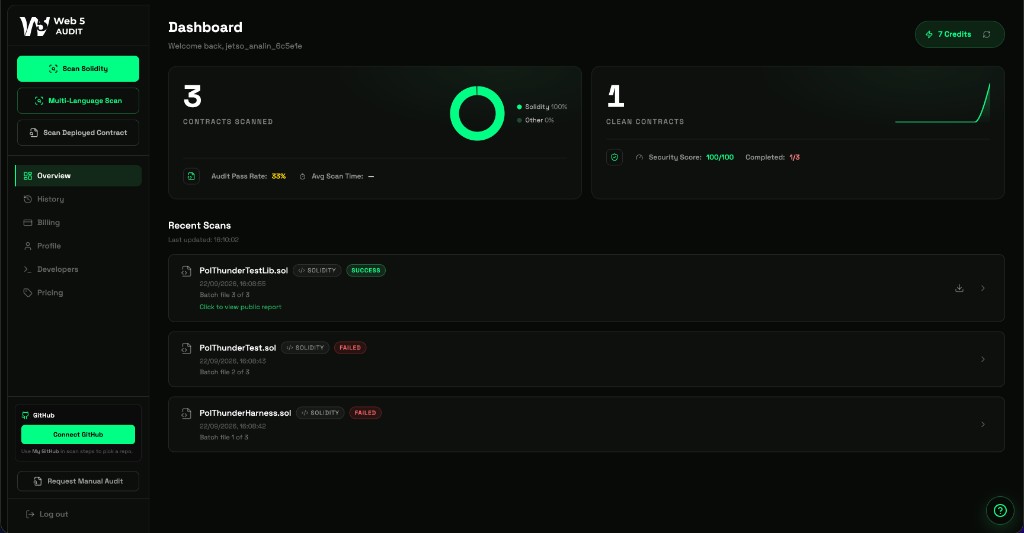
Automated contract scanner with public pay-as-you-go pricing. Not a formal security audit or assurance.
Open ↗This round · account layer
Later · growth & ops
Public infra wins the first job. Growth and ops modules are later expansion hypotheses on the planned shared account. Regulated rails depend on partner coverage and eligibility.
Authenticate, keep RPC alive, route liquidity, and on-ramp fiat through supported providers without leaving the app.
Fiat entry via regulated partners, stablecoin and cross-chain routing, monitoring now; multi-chain checkout later.
Access supported tokenized-asset routes through third-party providers, subject to asset availability, jurisdiction, and user eligibility.
Wallet login and scanning today; certificates and attestations as the ops layer ships.
Sessions and RPC now; NFT/token tooling and CRM as later growth modules.
Core infra public; alerts, analytics, and shared connect reduce multi-vendor ops once the account layer exists.
First purchase is a public module that solves an urgent workflow. Multi-module retention depends on shipping the shared account and proving attach.
Buyer: product / eng lead.
Trigger: broken swaps, fiat drop-off, or RPC instability.
Entry: CrossDEX, Ramp, or ChainRouter.
Buyer: payments / platform owner.
Trigger: need fiat entry plus liquidity rails under one vendor path.
Entry: Ramp, CrossDEX, Audit.
Buyer: founder / tech lead.
Trigger: ship auth, RPC, and scanning without assembling four vendors.
Entry: Auth docs, ChainRouter, Audit.
Web5 Audit has public pay-as-you-go pricing today. CrossDEX and Ramp are aggregators: our fee averages about 0.5–0.7% of transaction value; partner fees are added after our fee. ChainRouter and later modules remain proposed. Consolidated invoicing ships with the account layer.
Pre-revenue validation plan for wallets and fintechs first (education and gaming later): use public products and founder networks from Merklebits Private Limited to land design partners on one production workflow, then seek paid conversion, then ship shared-account alpha and attach. Founder-led until a dedicated sales hire.
Alchemy, LI.FI, MoonPay, Privy, and others each own deep categories. Customers still stitch them. Our bet is faster deployment of a defined multi-product workflow, then a shared commercial layer, not breadth alone.
Best at one job. Separate vendors for the rest.
Public modules now. Shared account this round. Growth/ops later.
Discovery only. No product or billing layer.
Same pain, rebuilt per client. We productize reusable modules instead of one-off delivery.
Selected transactions show strategic interest in rails. They are not Web5 Nexus valuation or demand proof.
Web5 Nexus operates under Merklebits Private Limited (India). Founders lead product; firm management stays with Merklebits. Bootstrapped and pre-revenue.

Leads Merklebits and Web5 Nexus product architecture.
LinkedIn ↗

Scales public modules from delivery work into product.
LinkedIn ↗

Crypto operator since mid-2010s. Distribution and market narrative.
LinkedIn ↗

Founder, India Blockchain Alliance. Policy and ecosystem access.
LinkedIn ↗

Partnerships and BD across blockchain, edtech, telecom, and BPO.
LinkedIn ↗Equity, financing structure, and diligence detail sit in the investor deck and data room — shared on request.
This lite deck is for incubators, angels, and partners. The investor deck adds the raise, use of funds, and deeper diligence framing. The data room covers entity and commercial detail under NDA.
Ramp and tokenized-asset routes are aggregators over licensed partners. KYC and licenses sit with those parties. Web5 Nexus does not claim money-transmitter, broker-dealer, or exchange licenses in this deck.
Web5 Audit is an automated scanner with public pay-as-you-go pricing. It does not replace a professional smart-contract audit, penetration test, or security assurance letter.
Web5 Nexus operates under Merklebits Private Limited (India). Product surfaces are public; this lite deck does not include fundraising terms, team bios, or diligence materials.